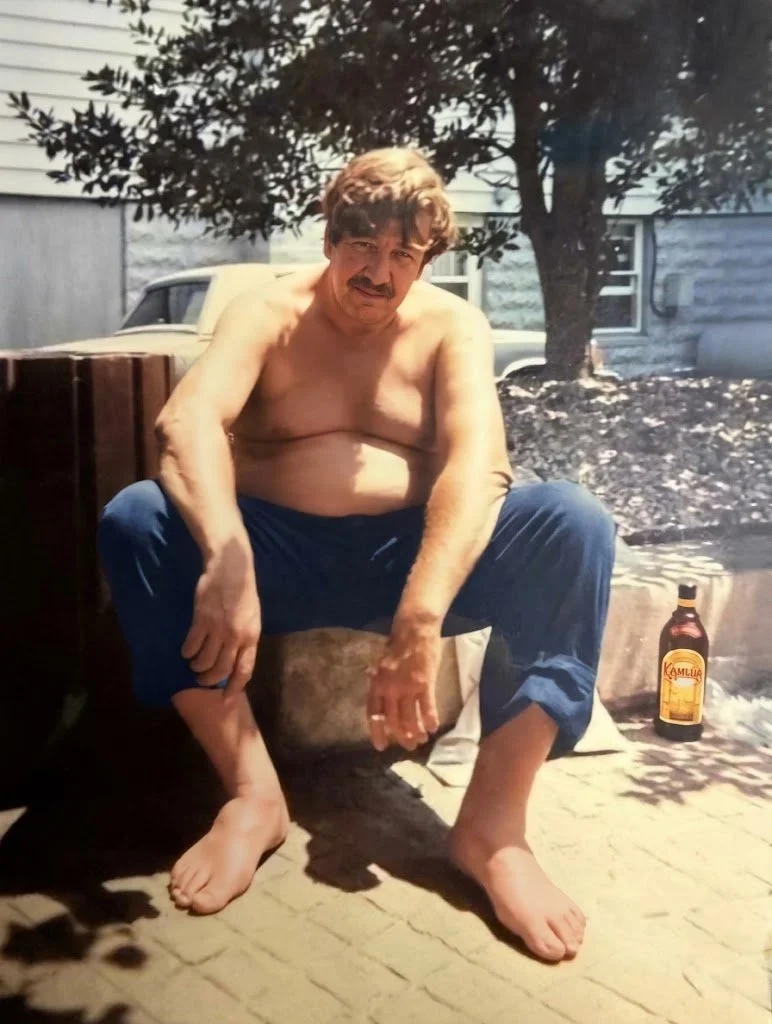
BIG JOHN: A GENTLE GIANT ON THE BOARDWALK
Introduction
Every pastor carries certain faces in their memory—people whose lives, struggles, and faith leave a permanent mark. During my years at Ocean City Baptist Church, located just steps from the boardwalk, I met countless individuals in crisis. Some were stranded travelers, some were families facing sudden hardship, and many were men and women living on the streets.
Among them was a man my children affectionately named Big John. His story is one I have carried with me ever since.
The Ministry at the Church Door
Because U.S. Route 50 ended at our church’s front steps, nearly every crisis case in Ocean City eventually found their way to us. People arrived hungry, sick, stranded, robbed, abandoned, or simply exhausted by life.
Our first staff hire beyond myself was Fran Meyer, a woman gifted with extraordinary mercy. Fran met with every person who came seeking help. She coordinated with churches, city agencies, and state programs. She listened, counseled, challenged, and loved each person who walked through our doors.
Often, she would bring me in to share Christ with them, and together we tried to help people find both practical support and spiritual hope.
Where the Street People Come From
Most people never imagine the backgrounds of those living on the streets. We met a Vassar graduate and renowned musician whose life had been devastated by mental illness. Several were veterans who never recovered from the trauma of war. One man was a Pearl Harbor survivor who rode around town in a wheelchair to gain sympathy from tourists.
The stories were heartbreaking, humbling, and unforgettable.
Meeting Big John
Big John lived on the streets with his father, Bill. They received a small monthly income—likely Bill’s Social Security—and spent it quickly on alcohol and friends before returning to homelessness. They often came by the church simply to sit and talk.
John was enormous—at least 6'3", barefoot, shirtless, with a ragged mustache and scraggly hair. At first, I was cautious. My three young children spent many hours at the church, and I wasn’t sure how safe they would be around him. But the kids loved him immediately. They named him “Big John,” and he became their gentle giant—kind, playful, and full of stories.
A Life Broken by Tragedy
John had once been a successful reporter for a major news outlet. He was intelligent, talented, and respected. But a tragedy in his life led him to alcohol. With his father already living on the streets, John followed the same path.
He lost his job, his reputation, and eventually everything else. He spent his days with other addicts—stealing, begging, and doing whatever was necessary to stay drunk or high. One man told me his strategy was to live on the streets during summer and then get arrested for the winter so he could enjoy “three hots and a cot.”
John’s Faith and His Tears
I grew to love Big John. He knew he was broken and wanted desperately to get his life together. He wept with me many times, confessing his failures and longing for change. He had been through rehab repeatedly, including one program we helped him enter.
He rarely attended Sunday morning services, but he often slipped into Sunday evening worship—barefoot, sometimes shirtless—and sat quietly in the back. When I gave the invitation, he frequently came forward in tears, telling me he loved Jesus and wanted to do better.
Two moments stand out vividly:
A Call to the Congregation
One evening he came forward to rededicate his life to Christ. Then he turned to the congregation, tears streaming down his face, and pleaded with them to come forward and do the same. I don’t know how the congregation felt, but I was deeply moved.
“I Can See Jesus in Your Eyes”
On another night, he wrapped me in a huge bear hug. I could smell the alcohol on him, and he looked every bit the broken man he was. Then he looked straight into my eyes and said, “Pastor Terry, I can see Jesus in your eyes.” My heart nearly burst.
The Battle of Addiction
John was like so many who live on the streets—captives of addiction. They try and fail so many times that they eventually believe they are unworthy of love or help. Their bodies betray them. Their minds weaken. Their spirit collapses.
Addiction is not only spiritual—it is physical, emotional, and mental. It is a lifelong battle that requires prayer, honesty, friendship, and the courage to admit the truth.
John never won that battle. But he never stopped trying.
John’s Final Chapter
The damage done to his body eventually took his life far too early. I had the privilege of preaching at his funeral, surrounded by many of his street friends. I shared that John loved Jesus and longed to escape the tragedy of his addiction.
He could not do so in this life, but he is now free from the body that betrayed him. Several of his friends turned their lives around after his death, putting their faith in Christ and seeking help for their addictions.
Big John succumbed to his addiction, but his gentle spirit and kind heart made me a better pastor and a better servant of Christ. I expect to see him in heaven—not because he conquered his addiction, but because he was looking for Jesus. And perhaps, in one holy moment, he truly did see Jesus in my eyes.
Closing Reflection
Every pastor has a “Big John”—a person whose brokenness reveals the beauty of grace. His story reminds me that God’s love reaches into the darkest corners of human suffering. And sometimes, the people we think we are ministering to end up ministering to us.
Discussion Questions
1. Seeing People as God Sees Them
Big John was often overlooked or dismissed by society, yet he carried deep emotion, intelligence, and spiritual longing.
What helps you see people—especially those struggling—as God sees them?
What barriers keep us from seeing the humanity and dignity in people who live on the margins?
2. The Nature of Addiction
The story highlights addiction as a physical, emotional, and spiritual battle.
How does understanding addiction as a multi‑layered struggle change the way we respond to people who suffer from it?
What role can the church play in supporting people who repeatedly fail and try again?
3. The Power of Presence
John often came to Sunday evening services simply to sit quietly in the back.
Why is presence—just showing up—so important in spiritual growth?
How can we create spaces where broken people feel safe enough to come as they are?
4. Redemption and Hope
John never fully overcame his addiction, yet he expressed sincere faith and longing for Jesus.
How does John’s story challenge our assumptions about what “victory” looks like in the Christian life?
Where do you see God’s grace at work in people who are still in the middle of their struggle?
5. The Impact of Compassionate Ministry
Fran’s ministry and my pastoral relationship with John changed lives—even after his death.
What does this teach us about the long-term impact of compassion?
How can your group become more intentional about ministering to people who feel forgotten?
Devotional Reflection: “I Can See Jesus in Your Eyes”
Scripture: “Truly I tell you, whatever you did for one of the least of these brothers of mine, you did for Me.” —Matthew 25:40
Big John’s life was marked by tragedy, addiction, and loss. Yet in the middle of his brokenness, he saw something that many people never notice: the presence of Jesus reflected through the love of another person.
When John looked into my eyes and said, “Pastor Terry, I can see Jesus in your eyes,” he wasn’t commenting on perfection, holiness, or spiritual superiority. He was recognizing the compassion of Christ—the kind of love that sits with the hurting, listens to the broken, and refuses to give up on people who have given up on themselves.
This is the heart of Jesus.
He walked among the poor, the addicted, the sick, the ashamed, and the forgotten. He touched lepers, ate with sinners, and welcomed those society pushed aside. He didn’t wait for them to get their lives together before He loved them. He loved them first—and that love often became the very thing that helped them stand again.
Big John never won his battle with addiction, but he did find something priceless: a glimpse of Christ’s love. And that glimpse changed him. It softened him. It drew him to the altar. It made him weep. It made him hope. It made him believe that Jesus might still want him.
And it changed me too.
Reflection: Where might Jesus be asking you to show His compassion today? Who in your life needs to see Jesus in your eyes—through patience, kindness, presence, or simple human dignity? And how might God be using you, just as He used Fran and your ministry, to remind someone that they are not forgotten?
Prayer: Lord Jesus, give me eyes to see the hurting, ears to hear their stories, and a heart willing to love them as You do. Let Your compassion shine through me so that someone who feels broken, ashamed, or alone might see You in my life. Use me to bring hope to the hopeless and light to the darkest places. Amen.

How the country changed during my lifetime?
I was born two years after World War II had ended; I was part of the "Baby Boomer" generation. For the first time in almost 12 years the world was at peace and the economy was soaring back after 10 years of extreme economic depression followed 7 years of a World War. The president of the United States was Harry Truman. I was five years old when Dwight David Eisenhower became President. The US was going through an amazing time of growth and prosperity. New homes were being built everywhere as the troops were returning home by the thousands. Five years after WWII, the US was drawn into another armed conflict in Korea. The war was the result of a rising Cold War with communism. Russia, China, and North Korea had all become communist nations and in order to stop the spread of communism, President Truman sent troops to South Korea to halt the expansion of the North Korean Communist party moving into South Korea with troops. The Vietnam war expanded under John F. Kennedy in 1961 again to halt the spread of communism into South Vietnam.
Needless to say, none of this meant anything to me at my age. I lived in a world surrounded by aunts and uncles, dozens of cousins my age, and lots of other Christian friends from our church. The world I knew was fun, quiet, and peaceful. We had no television, cell phones, or computers. Television was just beginning. Our first television was small, black and white, and had a rabbit ear antenna. Telephones were rotary dials with short wires connecting the phone to a big heavy base. My grandparents still had an old wall phone that had no rotary numbers. You had to wind a crank on the side and speak to an operator to tell them the number you wanted to call.
Invention after invention began to change the world. Wash tubs gave way to more modern washing machines. Clothes lines gave way to gas and electric dryers. Typewriters eventually gave way to computers. Televisions went from big boxes in the middle of the living room to color screens and finally to flat screen TV's. Telephones have gone from one bulky telephone in the house to everyone carrying their own cell phones. Wood burning kitchen stoves had become advanced electric and gas stoves, as well as microwave ovens.
Schools went from large classrooms with huge coat closets to more modern air conditioned and central heat classrooms. Blackboards became whiteboards and smartboards. Corporal punishment was removed from the schools and teachers have had their hands tied in terms of discipling students.
Politics, which have always been nasty, took a drastic turn with the ugly assassination of President John F. Kennedy and culminating with the Watergate Scandal during the Nixon Presidency. Since that time there has been a steady decline in respect for governmental authority and authority of any kind. And then with the Supreme Court ruling of Roe vs Wade in 1973, there has been a steady decline in respect for human life.
The country has changed dramatically during my lifetime. Some might argue that it is better now because of the technological advancements. Certainly, we are much more mobile today than when I was a child. We have immediate access to much more knowledge than has ever been available in history up to now. We have amazing advancements in science and medicine. We have extended the life expectancy of human beings and created thousands of new products. We have walked on the moon, landed probes on Mars and Venus and we have sent probes deep into outer space and can see things that man has never witnessed before. Yet, despite all this I am not sure that I believe we are better off today than when I was a young man. God has been mocked, ridiculed, and denied by our government, our educational system, and our media. People have forgotten how to care for their neighbors, they don't trust their government, and they have stopped going to church. Our general morality has declined terribly. We have no respect for God's law or His Word. There is no true justice in America. Our legal system is about who can afford the sharpest lawyers or who can appease the mob, which is under the influence of a corrupt public and social media system. For the first time in over 150 years, the newest generation has a lower IQ than their parents. I fear for my grandchildren and the future they face. My time is short here and the changes will have little effect on me, but my grandchildren will have to face whatever comes. It is with this in mind that I pray every day for our children and the world they will live in.
My constant prayer is that we have another “Great Awakening” in America. While I see some signs of this possibly happening, I fear perhaps we have gone too far away from God. I am encouraged by the testimony of so many quality athletes and musicians who have openly professed Christ as their Lord and Savior. I have been blessed to see mini revivals breaking out on numerous college campuses around the country. Yet, my heart is broken when I witness the assassination of Charlie Kirk and I am discouraged at the lack of leadership in our congress and senate and the election of Muslims who hate our country to some of the most prestigious offices in America. My confidence is in the fact that God is still on His throne and He is not surprised by the conditions of the world. He will be coming soon and He certainly will judge the evil that continues to rise. He is Lord of lords and King of kings. Let all glory be to our Savior, Jesus!
Therefore God has highly exalted him and bestowed on him the name that is above every name, so that at the name of Jesus every knee should bow, in heaven and on earth and under the earth, and every tongue confess that Jesus Christ is Lord, to the glory of God the Father. (Philippians 2:9-11 ESV)